
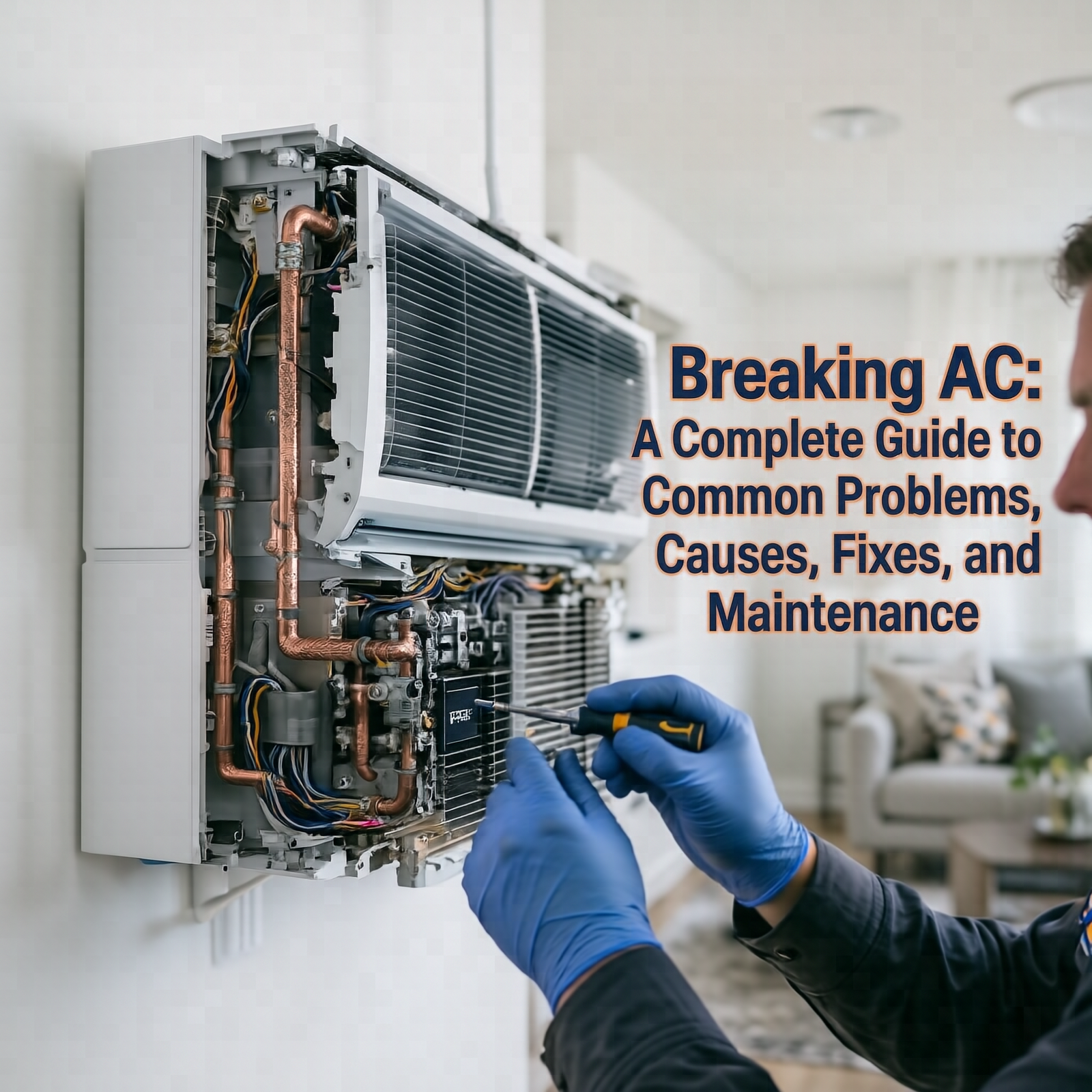
An air conditioner can make a hot day much easier. It keeps rooms cool and helps people feel comfortable. However, an AC can sometimes stop working as it should. This is where the term breaking AC becomes useful.
When an AC starts making strange sounds, blowing warm air, or turning off often, something may be wrong. Luckily, many AC problems have clear warning signs.
In this guide, we will explain breaking AC in simple words. We will cover common causes, warning signs, basic checks, maintenance, repair tips, and ways to avoid future problems.
What Does Breaking AC Mean?
The phrase breaking AC usually describes an air conditioner that has stopped working correctly. It can also describe an AC that has started showing signs of damage.
For example, the AC may turn on but fail to cool the room. It may also make unusual noises or produce weak airflow.
Therefore, breaking AC does not always mean the entire machine has failed. Sometimes, one small part creates the problem.
Why Does an AC Start Breaking?
An air conditioner has many parts. Each part has an important job. If one part stops working properly, the whole system can suffer.
Dust is one common cause. Dirty filters can block airflow. As a result, the AC has to work harder than normal.
Age can also cause trouble. Older machines often have worn parts. However, poor maintenance can make problems appear much sooner.
Dirty Filters Can Cause AC Problems
Air filters catch dust and other small particles. Over time, they become dirty.
A blocked filter can reduce airflow. Therefore, your room may take longer to cool.
A dirty filter can also make the AC work harder. So, checking the filter regularly is one simple way to prevent breaking AC problems.
Low Refrigerant Can Affect Cooling
Refrigerant helps an AC remove heat from the room. If the system has low refrigerant, cooling can become weak.
Low refrigerant often points to a leak or another system problem. Adding refrigerant without finding the cause will not solve the main issue.
Therefore, ask a trained technician to inspect the system. Refrigerant work needs proper tools and knowledge.
Electrical Problems Can Stop an AC
Electricity powers many important AC parts. A problem with wiring or another electrical component can stop the machine.
Sometimes, the AC will not start at all. In other cases, it may start and stop repeatedly.
Never touch exposed wires or open electrical panels if you lack training. Electrical repairs can be dangerous.
The Thermostat May Cause Trouble
The thermostat controls the temperature. It tells the AC when to cool and when to stop.
Sometimes, the problem is simply a wrong setting. Check that the thermostat uses cooling mode.
Also, check the temperature setting. If the setting looks correct but the AC still acts strangely, the thermostat may need inspection.
Why Does an AC Blow Warm Air?
Warm air from an AC can be very frustrating. However, several different problems can cause it.
First, check the thermostat. Then, check the air filter. Make sure the vents are open and not blocked.
If these simple checks do not help, the system may have a refrigerant, electrical, or mechanical problem.
Weak Airflow Is a Warning Sign
Good airflow helps an AC cool a room. Weak airflow can make the system feel much less effective.
A dirty filter may restrict the air. A blocked vent can create a similar issue.
Therefore, check these simple areas first. If airflow remains weak, a technician may need to inspect the system.
Why Does an AC Freeze?
Ice on an air conditioner may look strange during hot weather. However, frozen AC parts can happen.
Poor airflow is one possible cause. Low refrigerant can also cause freezing.
Turn the system off if you notice heavy ice. Let it thaw naturally. If the problem returns, get professional help.
Strange Sounds From an AC
Every AC makes some sound. However, a new or loud sound deserves attention.
A rattling sound may come from a loose part. A grinding sound may point to a mechanical problem.
Buzzing can sometimes indicate an electrical issue. Because sounds can have many causes, professional inspection may be the safest choice.
Why Does an AC Leak Water?
Water around an AC can have different causes. A blocked drain is one common possibility.
The system normally produces condensation while cooling. That water needs to drain away correctly.
If the drain becomes blocked, water may collect in the wrong place. Therefore, repeated leaks should receive attention.
AC Turning On and Off Repeatedly
Does your AC start and stop every few minutes? This behavior may indicate short cycling.
Several issues can cause this problem. A dirty filter, thermostat issue, incorrect system size, or mechanical fault may contribute.
Short cycling can put extra stress on the AC. Therefore, do not ignore repeated starting and stopping.
Outdoor AC Unit Problems
The outdoor unit needs good airflow. Leaves, dirt, plants, and other objects can block the area around it.
Check the area regularly. Remove loose debris that you can safely reach without opening the unit.
However, do not take apart the outdoor unit. Electrical parts inside can be dangerous.
How Hot Weather Affects AC Performance
Hot weather creates more work for an AC. The machine may need to run longer to maintain a comfortable room temperature.
High heat can also expose existing problems. A weak system may struggle even more during very hot days.
Therefore, check your AC before the hottest part of the season. Early maintenance can prevent unexpected trouble.
Signs Your AC May Be Breaking
Your AC may give warning signs before it stops completely.
Watch for changes such as:
- Warm air
- Weak airflow
- Strange sounds
- Water leaks
- Ice buildup
- Frequent cycling
- Unusual smells
- Higher energy bills
- Difficulty starting
- Longer cooling times
These signs do not always mean a major failure. Still, they deserve attention.
How to Prevent Breaking AC Problems
Prevention is often easier than repair. Simple maintenance can help your AC stay reliable.
Start with the air filter. Keep it clean according to the manufacturer’s instructions.
Next, keep vents open. Also, keep the outdoor unit free from obvious debris.
Clean or Replace the Filter
A clean filter helps air move through the system. It also helps reduce dust buildup.
Check your filter regularly. Some filters need cleaning, while others need replacement.
Do not guess when choosing a replacement filter. Use the correct size and type recommended for your AC.
Keep Air Vents Clear
Furniture can block vents without you noticing. Curtains can also cover them.
Walk around the room and check the vents. Make sure air can move freely.
Good airflow helps your AC distribute cool air more effectively. It may also reduce unnecessary strain.
Give the Outdoor Unit Space
The outdoor unit needs enough open space to release heat. Plants and debris can make this harder.
Keep grass and plants from growing too close to the unit. Remove leaves and other loose debris when needed.
However, avoid opening the unit yourself. Leave internal cleaning and repairs to trained professionals.
Check Your Thermostat
Your thermostat is worth checking before you assume the AC has failed.
Make sure it is set to cooling mode. Then, check the temperature setting.
If the thermostat uses batteries, weak batteries may also cause trouble. Replace them when necessary.
Listen for New Sounds
You know how your AC normally sounds. Therefore, you may notice changes quickly.
A new clicking, rattling, buzzing, or grinding sound can be useful information.
Do not ignore a strange sound simply because the AC still cools. Early inspection may help prevent a bigger repair.
Watch Your Energy Bill
A sudden rise in your energy bill can sometimes point to an AC problem.
A struggling system may run longer than usual. Poor airflow can also make the system work harder.
Of course, many things can change an energy bill. Still, an unexpected increase is worth checking.
When Should You Call a Professional?
Some basic AC checks are simple. However, other problems require professional skills.
Call a qualified technician if you notice electrical problems, refrigerant leaks, serious mechanical sounds, or repeated failures.
You should also seek help when the AC continues to malfunction after simple checks.
Can You Fix a Breaking AC Yourself?
You can safely check a few basic things. For example, you can inspect the thermostat and filter.
You can also make sure vents are not blocked. Checking the area around the outdoor unit can help too.
However, do not work on electrical wiring or refrigerant systems without proper training.
Common DIY Mistakes
Some people try to save money by fixing everything themselves. This can sometimes create more problems.
Using the wrong parts is one mistake. Another is adding refrigerant without finding a leak.
Some people also open electrical panels without understanding the risks. Therefore, know your limits and call a professional when needed.
How Often Should an AC Get Maintenance?
The right maintenance schedule depends on the AC system and how often you use it.
Basic tasks, such as filter checks, may need attention much more often than professional servicing.
A professional can inspect the system and identify worn or dirty components. Regular service can help catch problems early.
Does AC Age Matter?
Yes, age can affect reliability. Older machines may need more repairs than newer systems.
However, an old AC does not automatically need replacement. Some older units continue working well with proper maintenance.
Consider repair costs, performance, efficiency, and the overall condition before making a decision.
Repair or Replace Your AC?
This question often comes up when an AC has a serious problem.
A small repair may make sense if the system works well overall. However, repeated expensive repairs can change the situation.
Compare the repair cost with the expected future performance. A qualified technician can help explain your options.
How to Choose an AC Repair Service
Look for a technician with proper training and experience. Good communication also matters.
Ask the technician to explain the problem in simple words. You should understand what failed and what needs repair.
It can also help to compare estimates. Do not choose only by price.
Breaking AC and Indoor Comfort
A broken AC can affect the comfort of everyone in the home. Hot rooms can make sleeping and daily activities harder.
That is why early action matters. Small problems may become bigger when ignored.
Keep an eye on cooling performance. If something changes, investigate it before the AC completely stops.
Breaking AC During Summer
Summer places heavy demand on air conditioners. The system may run for long periods.
This makes regular maintenance even more important. A dirty filter or blocked airflow can become a bigger problem during extreme heat.
Therefore, test your AC before summer arrives. This gives you time to fix small problems.
Breaking AC and Air Quality
Your AC moves air around your home. A dirty system can affect the cleanliness of that airflow.
Filters help catch dust and other particles. However, filters need regular attention to work properly.
Good ventilation and proper cleaning can also support better indoor air quality.
How to Make Your AC Last Longer
Good habits can help extend the useful life of an AC.
Use the correct settings. Keep filters clean. Keep vents open. Also, arrange maintenance when needed.
Most importantly, do not ignore warning signs. Quick attention can sometimes prevent a small issue from becoming a major failure.
Simple Breaking AC Checklist
Before calling for help, check these basic points:
- Check the thermostat.
- Confirm cooling mode.
- Check the temperature setting.
- Inspect the filter.
- Check the vents.
- Look around the outdoor unit.
- Listen for unusual sounds.
- Look for ice.
- Check for unusual water.
- Turn the system off if you smell burning.
These checks can help you understand the problem. They do not replace professional repairs.
What Should You Never Do?
Safety should always come first. Do not touch exposed electrical wires.
Do not open electrical components without proper training. Also, do not handle refrigerant without the required skills and equipment.
If you notice smoke, burning smells, sparks, or serious electrical problems, turn the system off when it is safe to do so and get professional help.
How Can Small Problems Become Big Problems?
An AC problem can grow when you ignore it. For example, poor airflow can make the system work harder.
A small leak can also create additional damage if left unchecked. Mechanical problems may become worse as parts continue to operate.
Therefore, early attention is usually the smarter choice.
Breaking AC: 5 Small FAQs
1. What does breaking AC mean?
Breaking AC usually means an air conditioner is not working correctly. It may have a cooling, electrical, airflow, or mechanical problem.
2. Why is my AC running but not cooling?
A dirty filter, blocked airflow, thermostat problem, refrigerant issue, or mechanical fault can cause poor cooling.
3. Can a dirty filter damage an AC?
A very dirty filter can restrict airflow. This can make the system work harder and may contribute to other problems.
4. Why does my AC keep turning off?
Frequent shutdowns can have several causes. Thermostat problems, airflow issues, system sizing, or mechanical faults may play a role.
5. When should I call an AC technician?
Call a professional for electrical problems, refrigerant issues, repeated failures, major leaks, burning smells, or serious mechanical noises.
Conclusion
A breaking AC can cause stress, especially during hot weather. However, many problems show warning signs before the system completely fails.
Warm air, weak airflow, strange sounds, ice, water leaks, and frequent cycling can all tell you that something needs attention.
Therefore, keep your filters clean and your vents clear. Check the outdoor area and thermostat regularly. Most importantly, never take electrical or refrigerant repairs lightly.
With good care and timely repairs, you can reduce many breaking AC problems. A little attention today can help your air conditioner work better tomorrow.