
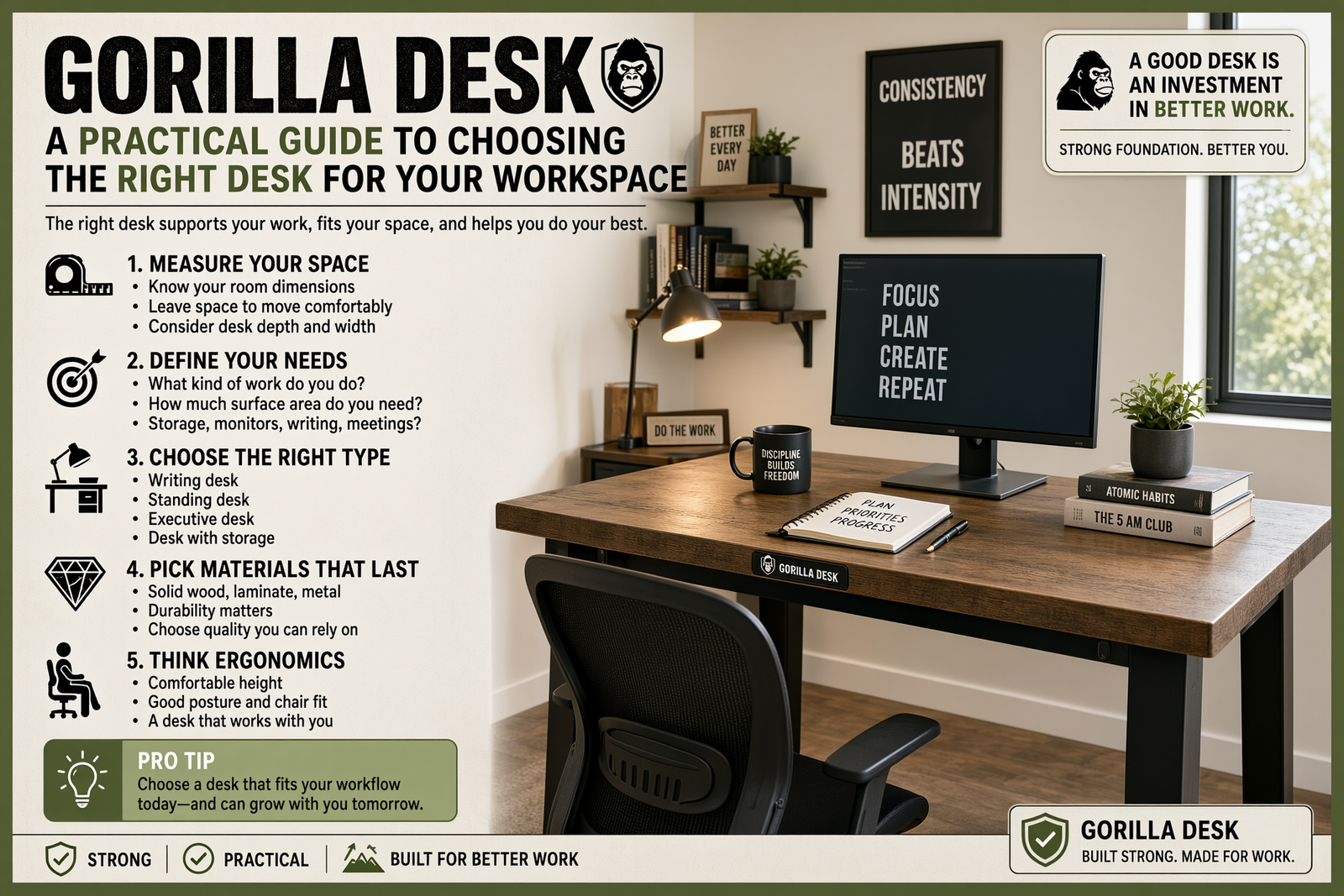
A good desk can completely change the way a workspace feels. Whether you work from home, manage a busy office, study for long hours, or spend your free time gaming, the desk you use has a direct impact on comfort, organization, and productivity. That is one reason the keyword Gorilla Desk has become interesting to people looking for a sturdy and practical workspace solution.
The name itself suggests strength and durability, but choosing a desk should involve more than looking at how strong it sounds. A useful desk needs to match your available space, equipment, working habits, and personal preferences. A beautiful desk that does not fit your room or provide enough surface area can quickly become frustrating.
In this guide, we will take a closer look at what to consider when searching for a Gorilla Desk, including design, workspace, durability, ergonomics, organization, and everyday usability. The goal is simple: help you understand what makes a desk genuinely useful rather than focusing only on appearance.
What Is a Gorilla Desk?
The term Gorilla Desk can be used in different contexts, so it is important to understand what you are actually looking for before choosing a particular model. Depending on the search result, it may refer to a desk brand, a specific desk design, or a general product concept associated with strength and heavy-duty use.
When people search for a desk with a name like Gorilla Desk, they are often interested in durability. A desk needs to handle everyday equipment such as computers, monitors, keyboards, speakers, notebooks, and other accessories. For some users, the workspace may also need to support heavier equipment or multiple displays.
However, durability is only one part of the equation. A strong desk can still be uncomfortable or poorly designed. The best choice combines a solid construction with useful dimensions, sensible cable management, comfortable working height, and enough room for everything you regularly use.
Why Desk Quality Matters
A desk is one of those pieces of furniture that people often underestimate. You may spend several hours a day sitting at it, yet it is easy to focus more on the computer or chair than the surface supporting everything around you. Over time, a poorly designed desk can become a daily annoyance.
A quality desk gives you a stable working surface. Your monitor should not constantly wobble when you type, and your equipment should have enough room to stay organized. Stability becomes particularly important when you use multiple monitors or other accessories that add weight to the desk.
The right desk can also make your workspace feel more intentional. When everything has a reasonable place, it becomes easier to concentrate. Instead of constantly moving notebooks, cables, and accessories out of the way, you can maintain a setup that supports the way you actually work.
Choosing the Right Desk Size
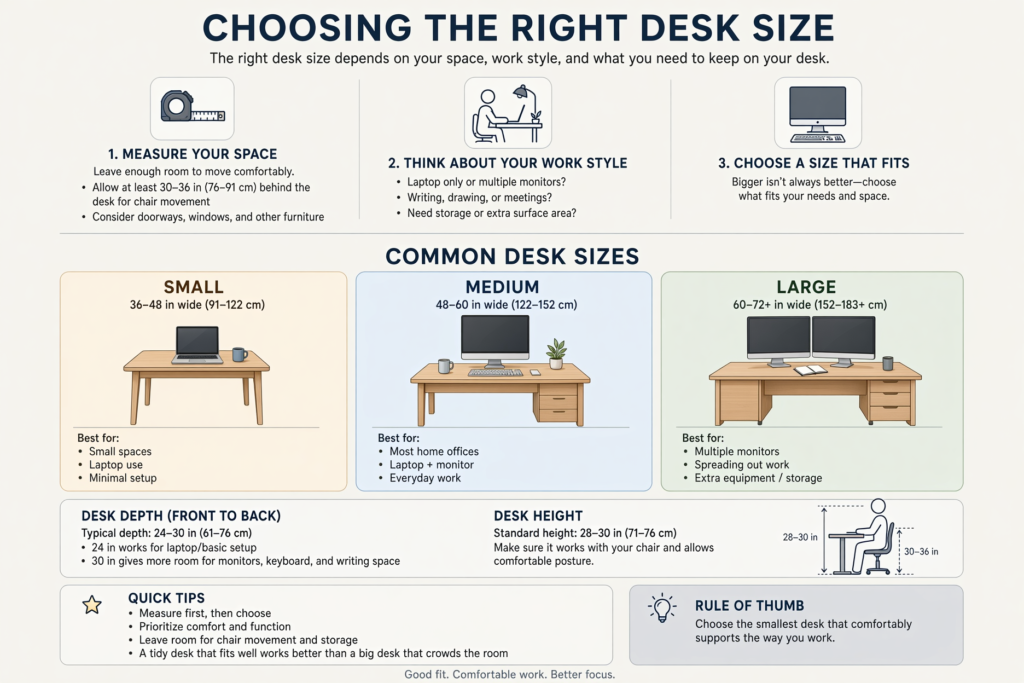
One of the first things to consider is desk size. Bigger is not automatically better. A large desk can provide plenty of room, but if your office or bedroom is small, it may make the entire space feel crowded.
Before choosing a desk, measure the area where you plan to place it. Consider the width and depth of the available space, as well as doors, windows, cabinets, and other furniture nearby. Leaving some breathing room around the desk can make the workspace much more comfortable.
Think about your equipment as well. Someone using a laptop may need significantly less surface area than someone running a desktop computer with two or three monitors. If you regularly write notes, use physical documents, or keep accessories nearby, additional desk depth can make a noticeable difference.
Desk Materials and Durability
Materials play an important role in determining how a desk looks and how well it performs over time. Different desk materials have different advantages, so the right option depends on your priorities and budget.
Wood-based surfaces can provide a warm and traditional appearance, while engineered materials may offer a practical balance between cost and durability. Metal components are commonly used for frames because they can provide strong support and stability. Some desks combine multiple materials to achieve a balance between appearance, strength, and weight.
When evaluating durability, do not look only at the desktop. The frame, legs, joints, and connection points are equally important. A thick desktop is not particularly useful if the supporting structure is unstable. Pay attention to how the desk is constructed and whether the design is intended for everyday use.
Ergonomics and Comfortable Desk Setup
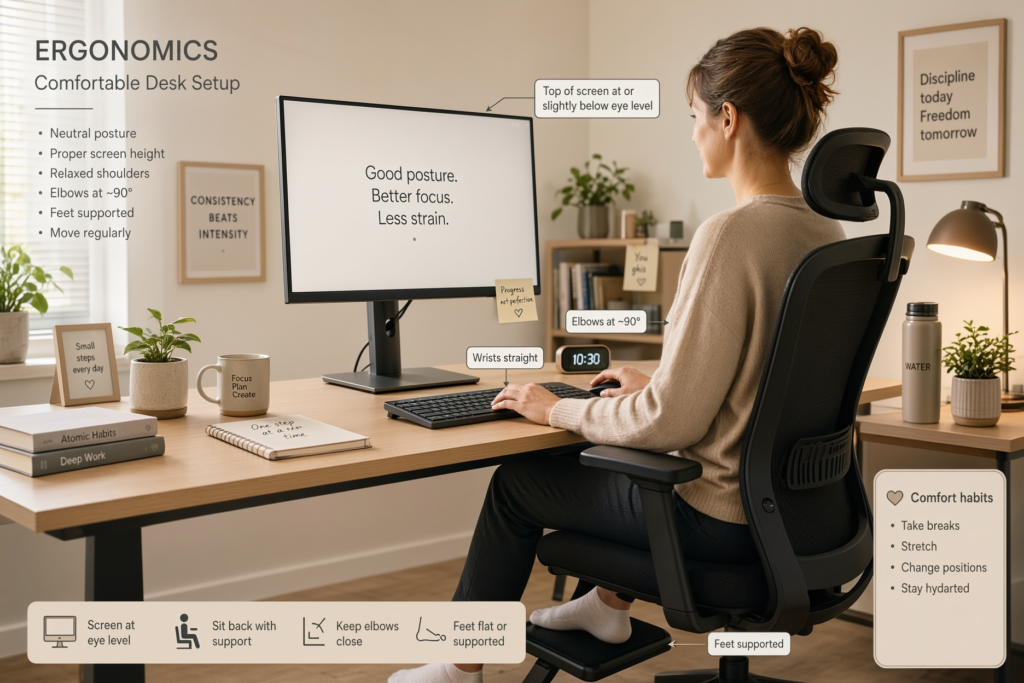
A desk should work together with your chair and monitor rather than being treated as a standalone item. Ergonomics matters because your workspace influences how you position your body during long periods of work or gaming.
Your desk height should allow you to use your keyboard and mouse comfortably without constantly raising or lowering your shoulders. Your monitor should also be positioned at a sensible viewing height. If the desk is too high or too low for your setup, you may find yourself adjusting your posture repeatedly throughout the day.
Another useful consideration is legroom. A desk may look excellent from the outside but become uncomfortable if drawers, support bars, or other components interfere with your legs. Before purchasing a desk, think about how you naturally sit and move while working.
Cable Management for a Cleaner Workspace
Modern workspaces can quickly become cluttered with cables. A computer, monitors, keyboard, mouse, speakers, charging devices, lamps, and other accessories can create a surprising number of wires.
A desk with cable-management features can make this problem much easier to handle. Cable holes, trays, clips, and under-desk routing systems can help keep wires away from the main working surface. Even simple cable management can make a workspace look considerably cleaner.
Good cable organization also makes maintenance easier. If you need to replace a device or disconnect equipment, properly arranged cables are easier to identify and reach. You do not have to pull apart your entire setup just to find one cable.
Gorilla Desk for Home Offices
Home offices often need to balance productivity with limited space. Unlike traditional corporate offices, a home workspace may share a room with other furniture and activities.
For remote workers, the desk needs to accommodate the equipment used throughout the workday. A laptop, external monitor, keyboard, mouse, headset, notebook, and other accessories can quickly consume available space. A well-planned desk setup allows these items to coexist without making the workspace feel chaotic.
The appearance of the desk matters in a home environment too. Since the workspace may be part of a bedroom, living room, or dedicated office, choosing a design that fits the surrounding furniture can make the entire room feel more cohesive.
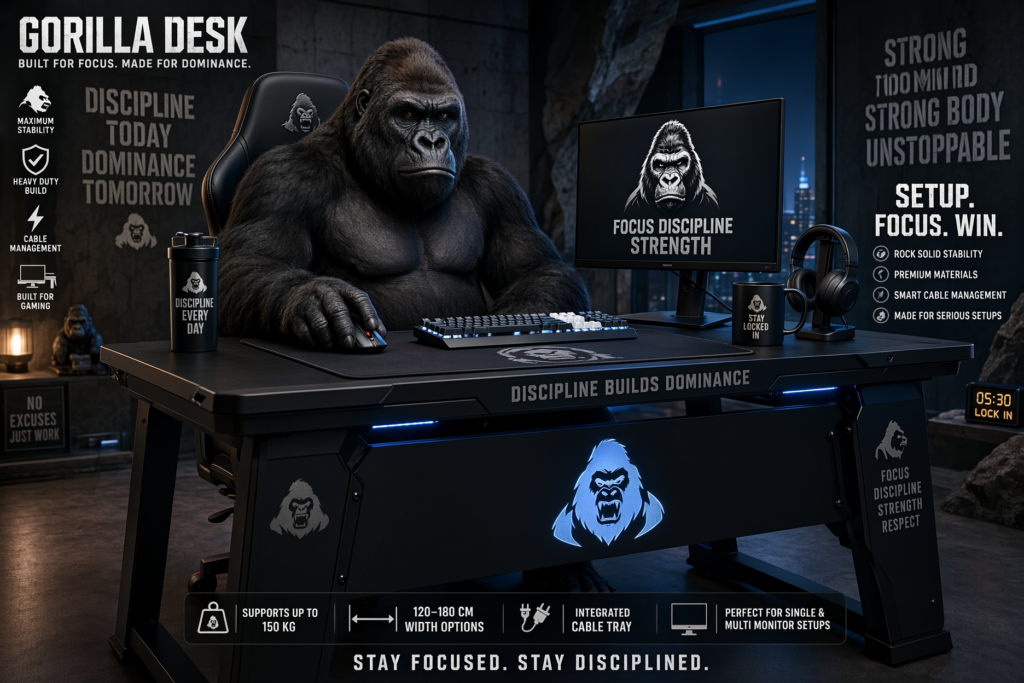
Gorilla Desk for Gaming Setups
Gaming setups often require more desk space than basic computer setups. A gaming computer may be accompanied by multiple monitors, speakers, a microphone, a headset stand, controllers, and other accessories.
A spacious and stable desk can make it easier to arrange this equipment. Monitor placement is particularly important because gamers typically want enough room for their keyboard and mouse while keeping the screens at a comfortable viewing distance.
Gaming also makes desk stability important. Fast keyboard and mouse movements can expose weaknesses in a poorly constructed desk. A stable frame and properly assembled joints can help create a more solid gaming environment.
Organization and Storage
Not every desk needs built-in storage, but storage can be useful depending on how you work. Drawers can provide space for stationery, documents, cables, and smaller accessories that would otherwise remain on the desktop.
Open space can be just as valuable as storage. A clean desk surface gives you room to spread out when working on a project or studying. The key is finding a balance between accessible storage and usable workspace.
If a desk does not include enough storage, you can always supplement it with shelves, drawer units, monitor stands, or small organizers. This approach can sometimes be better than choosing a desk with bulky built-in storage that takes up valuable legroom.
How to Maintain Your Desk
Even a durable desk benefits from basic maintenance. Regular cleaning helps protect the surface and keeps your workspace looking professional. Dust and dirt can accumulate around keyboards, monitors, and other equipment, so cleaning the entire area periodically is worthwhile.
Avoid placing excessive weight on areas that are not designed to support it. If the desk has adjustable components, check them occasionally to make sure they remain secure. Screws and joints can loosen over time, especially when a desk is frequently moved.
You should also pay attention to moisture and spills. Cleaning up liquid quickly can help prevent unnecessary damage to the desktop and nearby equipment. Small maintenance habits can extend the useful life of your workspace considerably.
What to Consider Before Buying a Gorilla Desk
Before choosing a Gorilla Desk, start with your actual needs rather than the desk’s appearance. Determine how much equipment you use, how much room you have available, and how many hours you typically spend at your workspace.
Next, consider construction and usability. Look at the desktop dimensions, frame design, available legroom, weight capacity information, cable-management options, and assembly requirements. These details can tell you much more about a desk than marketing language alone.
Finally, think about long-term value. A desk is furniture you may use for years, so choosing something solely because it is inexpensive may not always be the smartest approach. A well-built desk that fits your setup can provide better value over time than a cheaper option that needs to be replaced quickly.
Read more: Delta 8 Resellers Coupon Code: How to Recognize Legitimate Offers and Avoid Online Scams
Final Thoughts on Gorilla Desk
A good desk should do more than provide a flat surface for your computer. It should support your routine, keep your equipment organized, and make your workspace comfortable enough for everyday use.
When considering a Gorilla Desk, focus on the features that genuinely matter: stability, size, materials, ergonomics, cable management, legroom, and overall construction. The right combination depends on whether you are building a home office, gaming station, study area, or general-purpose workspace.
Ultimately, the best desk is not necessarily the biggest or most expensive one. It is the desk that fits your room, equipment, working style, and budget while remaining comfortable and reliable. Take the time to measure your space and understand your requirements before making a decision, and you will be much more likely to create a workspace that feels good to use every day.