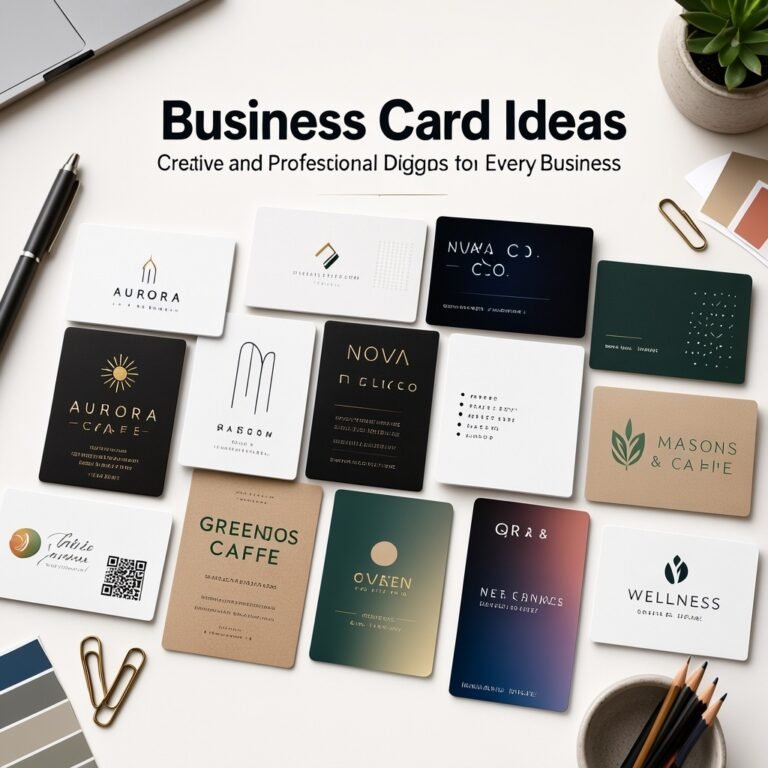
A business card may be small, but it can have a big purpose. It helps people remember your name and business. It also gives them a simple way to contact you later.
Today, many people save contacts on their phones. Still, a printed card can make a meeting feel more personal. It can also help your business look more organized and professional.
Therefore, choosing the right design matters. Your card should look good, but it should also remain easy to read. The best business card ideas balance style, useful information, and clear branding.
In this guide, we will explore creative business card ideas for many types of businesses. We will also discuss colors, fonts, shapes, materials, layouts, and printing tips.
Why Business Cards Are Still Useful
Business cards give people something they can hold. This simple thing can help them remember a meeting or conversation. For example, someone may meet you at an event and need your service a few days later.
A card puts your contact information right in front of them. They do not need to remember your name or search for you online. Instead, they can simply check the card.
Moreover, business cards can support your brand. Your logo, colors, and design can create a consistent image. Therefore, a good card can become a small but useful part of your marketing.
Simple Business Card Ideas for Beginners
If you are new to business card design, start with something simple. You do not need complicated graphics. You also do not need many colors.
Place your business name at the top or center. Then add your name and job title. Finally, include your phone number, email, website, or other important details.
Simple designs often look clean and professional. They also make information easier to find. Therefore, beginners should focus on clear spacing and readable text before adding fancy effects.
Minimalist Business Card Ideas
Minimalist designs use fewer elements. They usually have simple colors, clean fonts, and plenty of empty space. This style can make a card look modern.
For example, you could put your logo on the front. Then place your name and contact details on the back. This creates a simple two-sided design.
Another idea is to use only black and white. You can then add one brand color for a small detail. This keeps the card simple while still giving it personality.
Modern Business Card Ideas
Modern cards often use bold text and clean layouts. They may also use geometric shapes or unusual spacing. However, the design should still remain easy to understand.
Try making your business name the largest element. Then make your job title slightly smaller. Keep contact details at a comfortable reading size.
Also, avoid filling every empty area. Empty space can make important information stand out. As a result, your card can look more polished without adding extra graphics.
Creative Business Card Ideas for Small Businesses
Small businesses can use cards to show their personality. Your design does not need to look exactly like another company in your industry.
A bakery could use a small cupcake illustration. A gardening company could use a leaf. Meanwhile, a travel company could use a mountain or compass icon.
However, creativity should not make the card confusing. Keep your important details clear. A customer should quickly understand your business and know how to contact you.
Business Card Ideas for Freelancers
Freelancers often need cards that explain their skills quickly. Your job title should therefore be clear and easy to notice.
A writer could use “Content Writer.” A designer could use “Graphic Designer.” An SEO worker could use “SEO Specialist.”
You can also add a QR code to your portfolio. This gives clients another way to see your work. It also saves space because you do not need to list every service.
Business Card Ideas for Personal Brands
Personal brands often focus on one person. Therefore, your name can become the main design element.
Use a clear font for your name. Then add your job title below it. Your logo or personal symbol can appear near the name.
You can also use your brand colors. Try using the same colors on your website and social media. This creates a more consistent look across your online and offline presence.
Business Card Ideas for Online Businesses
Online businesses can connect printed cards with digital pages. A QR code makes this easy.
You can link the code to your website. You can also send people to your store, portfolio, social profile, booking page, or contact form.
Keep your website address visible too. Some people may prefer typing the address instead of scanning. Therefore, giving people both options can make your card more useful.
Business Card Ideas With QR Codes
QR codes can add a digital feature to a printed card. They allow people to open a webpage quickly with their phone.
For example, a restaurant can link to its menu. A photographer can link to a portfolio. A consultant can link to a booking page.
Before printing, test the QR code several times. Make sure it works on different phones. Also, keep enough empty space around the code so cameras can scan it easily.
Colorful Business Card Ideas
Color can make your card stand out. Bright colors can work well for creative businesses. They can also give a brand a fun and energetic feeling.
However, do not use too many colors without a plan. Two or three main colors can often create a stronger look.
Think about contrast too. Dark text should remain easy to see on a light background. Likewise, light text needs a background that gives it enough contrast.
Black and White Business Card Ideas
Black and white cards can look classic and professional. They work across many industries.
For example, a photographer might use a black card with a simple white logo. A consultant might use a white card with black text.
You can also add one small graphic. A thin line or simple icon can make the card more interesting without making it crowded.
Luxury Business Card Ideas
Luxury cards often focus on premium details. Thick paper can create a strong first impression. Special finishes can also make the card feel different.
Some printing services offer foil, embossing, or textured finishes. These effects can highlight a logo or business name.
Still, you do not need expensive effects to create a premium design. A clean layout, strong typography, and quality paper can already create an elegant appearance.
Unique Shape Business Card Ideas
Most business cards have a rectangle shape. A different shape can make your card more noticeable.
Rounded corners can create a friendly appearance. Square cards can look modern. Custom cuts can also create interesting designs.
However, think about storage. A card should still fit reasonably well in a wallet or card holder. A unique design should remain practical as well as attractive.
Vertical Business Card Ideas
Most cards use a horizontal layout. A vertical design can give your brand a different look.
Put your logo near the top. Then add your name and job title below it. Your phone, email, and website can follow.
Vertical cards work especially well with tall logos. They can also look good for photographers, artists, designers, and personal brands.
Business Card Ideas for Photographers
Photographers can turn their cards into small examples of their work. A beautiful photograph can become the main visual element.
A wedding photographer might use a wedding image. A travel photographer could use a landscape. A food photographer could show a colorful dish.
However, do not let the picture hide your contact information. Your website and email should remain easy to find.
Business Card Ideas for Real Estate Agents
Real estate agents often need cards that make contact easy. A professional photo can help people recognize the agent later.
Include your name, title, phone number, email, and website. You may also need to include agency or licensing information depending on your location.
A QR code can lead to property listings. It can also open your professional website. This gives potential clients an easy next step.
Business Card Ideas for Designers
Designers can use their cards as examples of their skills. The card itself can show how well they understand layout and typography.
Try using a creative type treatment. You could also add a small illustration or unusual layout.
At the same time, remember the main goal. People need to read your information. A creative card should still communicate clearly.
Business Card Ideas for SEO Professionals
SEO professionals can use digital themes. Search icons, website graphics, or simple analytics-style elements can fit the industry.
Add your name and title first. Then list your main service in a short phrase. You can include SEO, link building, content, or other services you offer.
A QR code can lead to your website or service page. This lets potential clients learn more without filling the card with text.
Business Card Ideas for Restaurants and Cafes
Restaurants and cafes can use food-related designs. A small illustration of a cup, plate, cake, or other item can support the brand.
You can also place a QR code on the card. Link it to your menu, ordering page, or restaurant website.
Another idea is to include a simple offer. For example, you could provide a small discount for a future visit. Make sure the offer terms remain clear.
Business Card Ideas for Travel Businesses
Travel companies can use images and symbols connected with adventure. Mountains, maps, airplanes, cameras, and location pins can all work.
Choose colors that match your travel brand. Natural shades can create an outdoor feeling. Bright colors can create a more energetic style.
A QR code can lead to your travel website. It could also open a booking page or travel guide. This gives the card a useful digital purpose.
Business Card Ideas for Fitness Coaches
Fitness professionals can use bold and energetic designs. Strong typography can make the card feel active.
You could include a simple fitness symbol. A dumbbell, running figure, or abstract movement shape can work.
Keep the information short. Add your name, service, phone, email, website, and social handle. If you offer online coaching, you can add a QR code to your program page.
Business Card Ideas for Lawyers
Law firms often need a clean and professional appearance. Simple fonts and controlled colors can help create that look.
Keep the business name easy to see. Then include the lawyer’s name and professional title.
Contact information should remain clear. Avoid decorative elements that make the card difficult to read. A simple layout can communicate important details without unnecessary design.
Business Card Ideas for Artists
Artists have more freedom to experiment. Your card can include artwork, sketches, patterns, or creative typography.
You could use the back of the card as a tiny art sample. This can make the card more memorable.
Still, keep your contact details readable. Your website or portfolio is especially important because people may want to see more of your work.
Choosing the Right Business Card Font
Fonts affect how your card feels. A clean sans-serif font can create a modern look. A serif font can feel more traditional.
Try not to use too many fonts. One or two fonts can usually create enough variety.
Also, avoid very small text. A font may look fine on a computer but become difficult to read after printing. Always check the final design carefully.
Choosing Colors for Your Card
Colors should match your brand. For example, green may work well for an environmental business. Blue can fit many professional brands.
Red can create a strong and energetic appearance. Black can create a classic look. Yellow can create a bright and friendly feeling.
These are general design associations, not strict rules. Therefore, choose colors based on your brand, audience, and existing visual identity.
What Information Should Go on a Business Card?
Your card should contain useful information. However, it does not need every detail about your company.
Consider adding:
- Business name
- Logo
- Your name
- Job title
- Phone number
- Email address
- Website
- Social media handle
- QR code
- Business address, when useful
Choose only the details that matter. Too much information can make the card crowded.
How to Use the Front and Back
You can use both sides of your card. The front can focus on branding.
For example, place your logo and business name on the front. Then put contact details on the back.
Another option is to put a large design on the front. Use the back for your name, services, and contact information.
Common Business Card Mistakes
One common mistake is adding too much text. A business card has limited space. Therefore, long descriptions usually do not work well.
Another mistake involves poor color contrast. If people cannot read your text, the design loses its purpose.
Also, check every phone number and email address. One small mistake can stop a potential customer from reaching you.
How to Make Your Card Memorable
A memorable card often has one strong idea. It could use a bold logo, unusual shape, creative image, or special material.
Try connecting the design with your business. For example, a photographer can use a photo. A gardener can use a leaf.
Do not try to make every part of the card special. One strong feature can often work better than many competing elements.
Business Card Printing Tips
Choose good card stock for your needs. A thicker card can feel more solid than very thin paper.
Ask your printer about matte and glossy finishes. You can also ask about textured paper and other options.
Before ordering many cards, check a sample. Colors and small text can look different after printing. A sample gives you a chance to fix mistakes first.
How Many Business Cards Should You Print?
The right amount depends on your work. Someone who attends many events may need more cards.
A new business may want to print a smaller batch first. This gives you time to test the design.
You should also consider future changes. If you expect to change your website or phone number soon, avoid printing a huge quantity.
How to Give Out Business Cards
Do not hand your card to everyone without context. Instead, use it after a useful conversation.
For example, someone may ask about your service. Explain what you do first. Then give them your card so they can contact you later.
You can also leave cards at suitable locations. However, ask for permission before placing them in another business.
Digital and Printed Business Cards
Digital cards can make contact sharing quick. Printed cards, however, can still work well during face-to-face meetings.
You can use both options together. A printed card can include a QR code that opens your digital contact page.
This creates a simple connection between offline and online marketing. Therefore, you do not always need to choose only one format.
Eco-Friendly Business Card Ideas
Businesses that care about the environment may choose recycled paper. This can support an eco-friendly brand message.
You can also reduce unnecessary printing. Instead of adding every social link, include your website and let visitors find the rest there.
Simple designs can also reduce the amount of ink and decoration used. Therefore, a clean card can support both design and practical goals.
Business Card Ideas for Networking Events
Networking events can involve many people and many conversations. Your card should therefore be easy to understand quickly.
Put your name and business near the top. Make your main service clear. Then add your preferred contact method.
A QR code can help people connect with you after the event. However, make sure the card still works without the code.
How to Keep Your Business Card Design Consistent
Your card should match your other brand materials. Use similar colors, fonts, and logo styles.
This can include your website, social media pages, packaging, email signature, and other marketing materials.
Consistency helps create a recognizable identity. When people see the same visual style in different places, they can connect those materials with your business.
Final Design Checklist
Before sending your card to print, check these points:
- Is the business name correct?
- Is your name spelled correctly?
- Does the phone number work?
- Does the email address work?
- Does the website open?
- Does the QR code scan?
- Is the text easy to read?
- Is the logo clear?
- Do the colors match your brand?
- Is there enough empty space?
- Does the design look good on both sides?
Taking a few minutes to check everything can prevent expensive mistakes.
5 Small FAQs About Business Card Ideas
What makes a good business card?
A good card has clear information and a simple design. It should also match your brand and make contacting you easy.
Should I add a QR code?
Yes, a QR code can be useful. You can connect it to your website, portfolio, store, booking page, or contact form.
How many colors should I use?
Two or three main colors often work well. However, the right number depends on your brand and design.
Should a business card have a photo?
It depends on your business. A photo can help personal-service professionals become easier to recognize.
Is a two-sided business card better?
Using both sides gives you more design space. You can use one side for branding and the other for contact information.
Conclusion
A business card can be a simple but useful marketing tool. It helps people remember your name, business, and contact details.
There are many business card ideas to explore. You can choose a minimalist style, bold colors, creative shapes, premium materials, or a design that matches your industry.
Most importantly, keep your card useful. Make the text readable. Check your contact information. Use your brand colors and logo consistently.
A strong business card does not need to be complicated. It needs to communicate clearly and represent your business well. With the right design, your small card can become a valuable part of your everyday networking.