
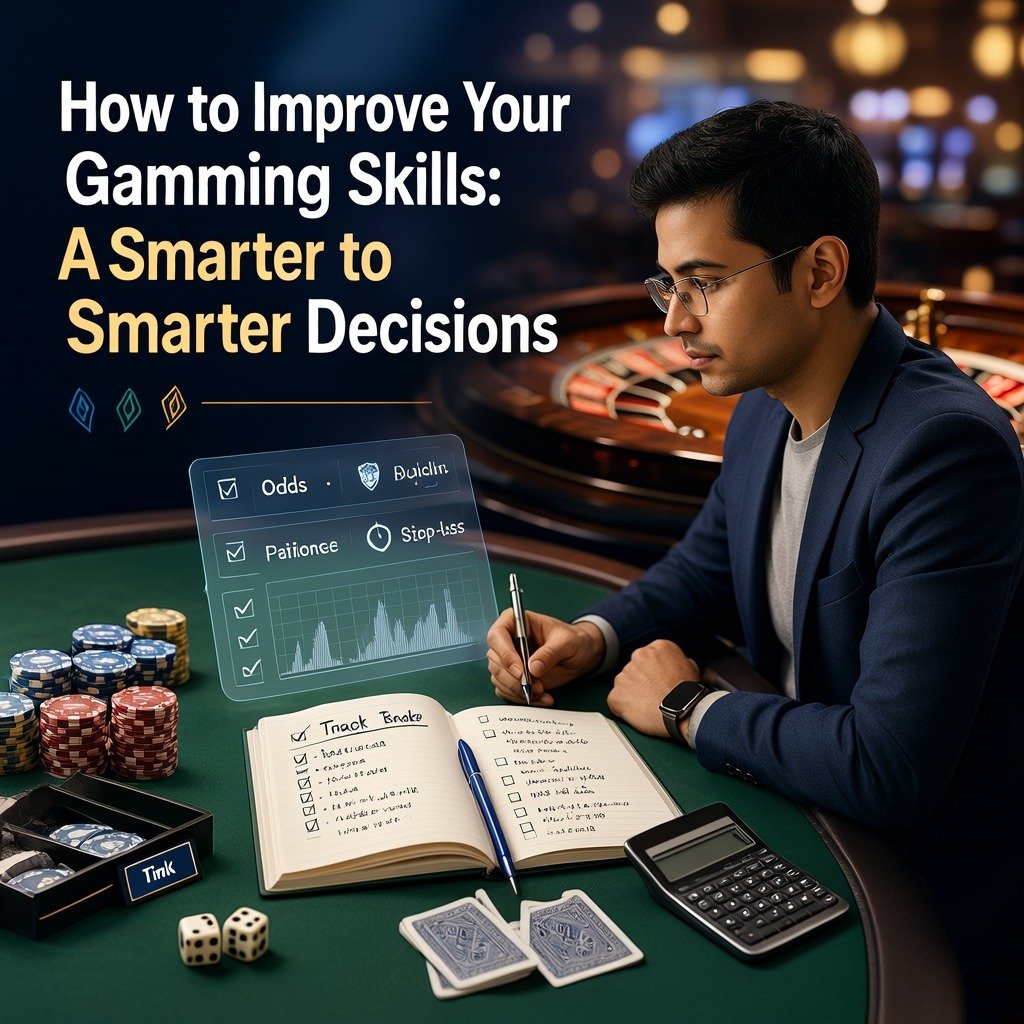
Gambling can look simple at first. You choose a game, place a bet, and wait for the result. However, good decisions require more than luck. You also need patience, money control, game knowledge, and a clear plan.
If you are searching for how to improve your gambling skills, start by understanding one important fact. No skill can remove the house edge from casino games. Luck still plays a major role.
Still, you can improve the way you make decisions. You can learn the rules. You can understand odds. You can control your betting money. Most importantly, you can learn when to stop.
Understand That Gambling Involves Risk
The first step in learning how to improve your gambling skills is understanding risk. Every gambling game involves a chance of losing money. Even when you understand a game well, the result can still go against you.
For example, you may make a smart decision in a card game. However, the cards can still produce an unexpected result. Therefore, skill does not guarantee a winning outcome.
Because of this, you should treat gambling as entertainment. Do not treat it as a reliable way to make money. Only use money that you can afford to lose.
Learn the Rules of Every Game
Game knowledge is an important part of how to improve your gambling skills. Before placing a bet, learn how the game works. Understand the rules, payouts, and different betting options.
You should also learn what each result means. Some games have complicated rules. Therefore, rushing into a game can lead to poor decisions.
Take your time. Read the rules carefully. If you do not understand something, do not bet until you understand it.
Learn About Probability
Probability helps you understand how likely an event may be. It cannot tell you exactly what will happen next. However, it can help you make more realistic decisions.
For example, a coin has two sides. If you flip it many times, each side may appear around half the time. However, five heads in a row does not mean tails must come next.
This idea matters in gambling. A previous result does not always change the next result. Learning probability can help you avoid false beliefs about gambling patterns.
Understand the House Edge
Another key part of how to improve your gambling skills is learning about the house edge. The house edge represents the mathematical advantage that a casino or gambling operator has in many games.
A house edge does not mean you will lose every single bet. You can still win individual sessions. However, over many bets, the mathematical advantage matters.
Therefore, learn the house edge before playing. A lower house edge generally means less mathematical disadvantage, but it does not remove risk.
Set a Gambling Budget
Money management plays a major role in how to improve your gambling skills. Before gambling, decide how much money you are willing to spend.
Think of this amount as entertainment money. Once it is gone, stop. Do not add more money simply because you want to continue playing.
A clear budget can also reduce emotional decisions. You know your limit before the game starts. As a result, you have less reason to change your plan during a stressful session.
Never Chase Your Losses
Chasing losses is one of the biggest mistakes gamblers can make. It happens when someone loses money and then increases bets to try to win it back.
This approach can create a dangerous cycle. A bigger bet does not make the previous loss disappear. Instead, it can create an even larger loss.
If you lose your planned gambling budget, stop. Take a break. Remember that another bet cannot guarantee recovery.
Avoid the Gambler’s Fallacy
The gambler’s fallacy is the belief that a previous random result makes another result due.
Imagine a roulette wheel produces several red results. Some players may believe black must appear next. However, the previous spins do not force the next spin to be black.
Learning this idea is another useful part of how to improve your gambling skills. Random games can produce unusual streaks. A streak does not automatically predict what happens next.
Do Not Trust Gambling Systems That Promise Easy Wins
You may find betting systems that promise guaranteed profits. Be careful with these claims. No betting system can guarantee success in games based on chance.
Some systems tell players to increase their bets after losing. This can become risky very quickly. A long losing streak can require much more money than expected.
Instead, focus on understanding the game and controlling your spending. A simple plan is safer than chasing a system that promises easy money.
Practice Self-Control
Self-control is an important part of how to improve your gambling skills. Gambling can create strong emotions. A win may make you excited. A loss may make you frustrated.
Both feelings can affect your decisions. Therefore, learn to notice your emotions before making another bet.
If you feel angry, stressed, or desperate to win, stop. Take time away from the game. A break can help you think more clearly.
Set Time Limits
Money is not the only thing you should control. Time matters too.
Long gambling sessions can make you tired. When you become tired, you may make decisions without thinking carefully. You may also forget your original budget.
Set a time limit before you begin. When the time ends, stop playing. This simple habit can help keep gambling within reasonable boundaries.
Keep Gambling Separate From Important Money
Do not use money needed for important expenses. This includes rent, food, bills, school costs, debt payments, and emergency savings.
Gambling money should come from money you can safely spend. It should never replace money needed for daily life.
This is one of the most important lessons when learning how to improve your gambling skills. Good money management matters more than trying to find a perfect betting strategy.
Understand Variance
Variance means that short-term results can differ greatly from expected long-term results.
You might win several times in a short period. You might also lose several times. These short-term results do not necessarily show that you have discovered a winning method.
Understanding variance can make gambling results easier to interpret. It also helps prevent overconfidence after a lucky streak.
Avoid Gambling When Emotional
Your emotional state can affect your choices. If you are angry, sad, worried, or excited, you may take risks that you would normally avoid.
Therefore, check your mood before gambling. Ask yourself if you are calm enough to follow your plan.
If the answer is no, wait. There is no need to gamble immediately. You can always choose not to play.
Learn the Difference Between Skill and Luck
Some gambling activities include more skill than others. Games such as poker can involve strategy, mathematics, psychology, and decision-making.
Other games rely much more heavily on random outcomes. In these games, your decisions may have limited influence on the final result.
Knowing this difference is useful. It helps you understand where learning can actually improve your decisions and where luck remains the main factor.
Study Before You Play
Research can help you make more informed choices. Learn the rules and basic mathematics of the game.
For skill-based games, study common strategies. Learn how different decisions affect your chances. However, remember that strategy does not guarantee profit.
Also, check whether gambling is legal where you live. Rules can differ between countries and regions. Use licensed and regulated services where gambling is permitted.
Keep Records of Your Gambling
Keeping records can help you understand your behavior.
You can record the date, amount spent, amount won or lost, and how long you played. You can also record how you felt before and after gambling.
The goal is not to find a magic winning pattern. Instead, records can show whether gambling is becoming too expensive or taking too much of your time.
Do Not Increase Bets After Winning
A winning streak can create confidence. You may start thinking that you have discovered a special method.
However, a few wins do not guarantee future wins. Random results can change quickly.
If you choose to gamble, keep your original limits. Do not suddenly increase your spending because you feel lucky. Staying consistent can help prevent emotional decisions.
Set a Stop-Loss Limit
A stop-loss limit is the maximum amount you are willing to lose during a session.
For example, you may decide that reaching your personal limit means the session ends. The exact amount should depend on your own affordable entertainment budget.
Once you reach the limit, stop. Do not move the limit because you are hoping for a comeback.
Consider a Win Limit Too
A win limit can also help with discipline. You may decide beforehand that you will stop after reaching a certain amount.
This does not mean the next bet would be a loss. Instead, it gives you a clear stopping point.
Having both loss and time limits can make your gambling plan easier to follow.
Do Not Borrow Money to Gamble
Borrowing money for gambling creates additional financial risk. A gambling loss can then become a debt.
Avoid using credit, loans, borrowed money, or money meant for someone else.
If you cannot afford to gamble with your own entertainment money, the safest choice is not to gamble.
Be Careful With Online Gambling
Online gambling can be available at almost any time. This convenience can make it easier to spend more than planned.
Therefore, use strong limits. Keep track of deposits and withdrawals. Check your account regularly.
Also, look for responsible gambling tools offered by licensed operators. These may include deposit limits, time limits, cooling-off periods, and self-exclusion options.
Understand Promotional Offers
Bonuses and promotional offers can look attractive. However, they often come with conditions.
Before using an offer, read the terms. Check wagering requirements, expiry dates, eligible games, and withdrawal rules.
Never assume that a bonus means free money. Understanding the conditions is another important part of how to improve your gambling skills.
Avoid Gambling Advice From Social Media Hype
Social media often shows winning bets more than losing bets. This can create an unrealistic picture of gambling.
Someone may post a large win while saying little about previous losses. Therefore, one winning screenshot does not prove that a strategy works.
Be careful with influencers who promise guaranteed returns. Look for clear evidence and realistic information instead.
Learn From Mistakes Without Chasing Them
Everyone can make poor decisions. The important thing is what you do afterward.
If you break your budget, examine what happened. Maybe you played too long. Maybe you increased your bets after losing. Maybe you gambled while emotional.
Use that experience to create stronger limits. Do not try to fix the mistake with another risky bet.
Use Responsible Gambling Tools
Many regulated gambling services provide tools designed to help users control gambling.
These tools can include deposit limits, spending limits, session reminders, cooling-off periods, and self-exclusion.
Use these features when available. They can create an extra barrier between an emotional decision and another bet.
Know the Warning Signs
Learning how to improve your gambling skills also means knowing when gambling is becoming harmful.
Warning signs can include spending more than planned, hiding gambling from others, borrowing money, chasing losses, missing responsibilities, or feeling unable to stop.
Another warning sign is thinking about gambling throughout the day. If gambling begins to affect your work, school, relationships, or finances, take it seriously.
Take Regular Breaks
Breaks can help you stay aware of your behavior. You do not need to gamble every day.
Try spending time on other activities. Exercise, hobbies, family time, reading, and outdoor activities can all provide different forms of entertainment.
A break can also show you whether you are gambling because you enjoy it or because you feel that you need it.
Focus on Decisions, Not Winning
A useful mindset is to focus on making reasonable decisions rather than expecting every bet to win.
You cannot control random outcomes. You can control your budget, time, and willingness to stop.
This is perhaps the most realistic answer to how to improve your gambling skills. Better gambling decisions start with accepting what you cannot control.
Build a Simple Gambling Plan
A simple plan can make your limits easier to follow.
Before gambling, decide:
- How much money can you afford to spend?
- How long will you play?
- What games will you play?
- What are the rules?
- When will you stop?
- What will you do if you lose the budget?
- What will you do if you feel emotional?
Write the answers down if that helps. Then follow your plan.
Do Not Expect Gambling to Replace Income
Gambling should not become your main financial plan. It does not provide a reliable salary.
Even skilled players can experience losing periods. Casino games also commonly include a mathematical advantage for the operator.
Therefore, keep gambling separate from work and investing. Use normal income sources for important financial goals.
Understand That More Gambling Means More Exposure
Every additional bet creates another opportunity to lose money.
This does not mean every bet loses. It means more gambling creates more exposure to gambling risk.
Therefore, playing longer does not automatically improve your chances of making money. Sometimes, the best decision is simply to stop.
Protect Your Personal Information
Online gamblers should also think about digital safety.
Use strong passwords. Avoid sharing account details with strangers. Be careful with unknown websites and suspicious links.
Never send money to someone who claims they can guarantee a gambling win. Also, avoid giving strangers access to your gambling account.
Improve Your Financial Skills
Learning basic personal finance can help you make better gambling decisions.
Understand your income, expenses, savings, and debts. Create a budget for normal life before thinking about entertainment spending.
When your essential finances are organized, it becomes easier to see whether gambling fits within your available spending money.
Know When Not to Gamble
Sometimes the best gambling skill is knowing when to walk away.
Do not gamble when you need money for important expenses. Do not gamble when you feel pressured to win. Do not gamble to escape serious problems.
Also, do not gamble because someone tells you that you are guaranteed to win. There is no guaranteed gambling strategy.
What Really Helps You Improve?
So, how to improve your gambling skills in a realistic way?
Start with knowledge. Learn the rules and basic probability. Then add discipline. Set money and time limits before you play.
Next, control your emotions. Never chase losses. Finally, understand that luck remains part of gambling. These habits can improve your decision-making without creating false expectations.
A Simple Checklist Before Gambling
Use this quick checklist before starting:
- I can afford the money I am using.
- I have already paid important expenses.
- I have set a spending limit.
- I have set a time limit.
- I understand the game rules.
- I understand that I can lose.
- I will not chase losses.
- I will not borrow money.
- I will stop if I feel emotional.
- I will treat gambling as entertainment.
If several answers are no, consider taking a break instead.
5 Small FAQs About How to Improve Your Gambling Skills
1. Can gambling skills guarantee a win?
No. Skill cannot guarantee a win. Some games involve strategy, but chance still affects outcomes. Casino games often include a house edge.
2. What is the best way to manage gambling money?
Set an affordable entertainment budget before playing. Never use money needed for important expenses. Stop when you reach your limit.
3. Does chasing losses work?
No strategy can guarantee that you recover losses. Increasing bets after losing can create larger financial losses.
4. Can probability predict the next result?
Probability can describe chances. It cannot guarantee the next outcome. Random events can produce surprising streaks.
5. When should someone stop gambling?
Stop when you reach your money or time limit. Also stop if gambling causes stress, debt, secrecy, or problems with daily responsibilities.
Conclusion
Learning how to improve your gambling skills is not about finding a secret trick that guarantees money. It is about making informed choices and understanding risk.
Learn the rules. Study probability. Understand the house edge. Set a budget. Control your time. Most importantly, never chase losses.
Gambling can involve luck, and luck cannot be controlled. Therefore, the safest approach is to keep gambling within limits and treat it as entertainment rather than a source of dependable income.
If gambling starts causing financial or personal problems, consider stopping and seeking support from a trusted person or a local gambling-support service. Asking for help early can make it easier to regain control.