
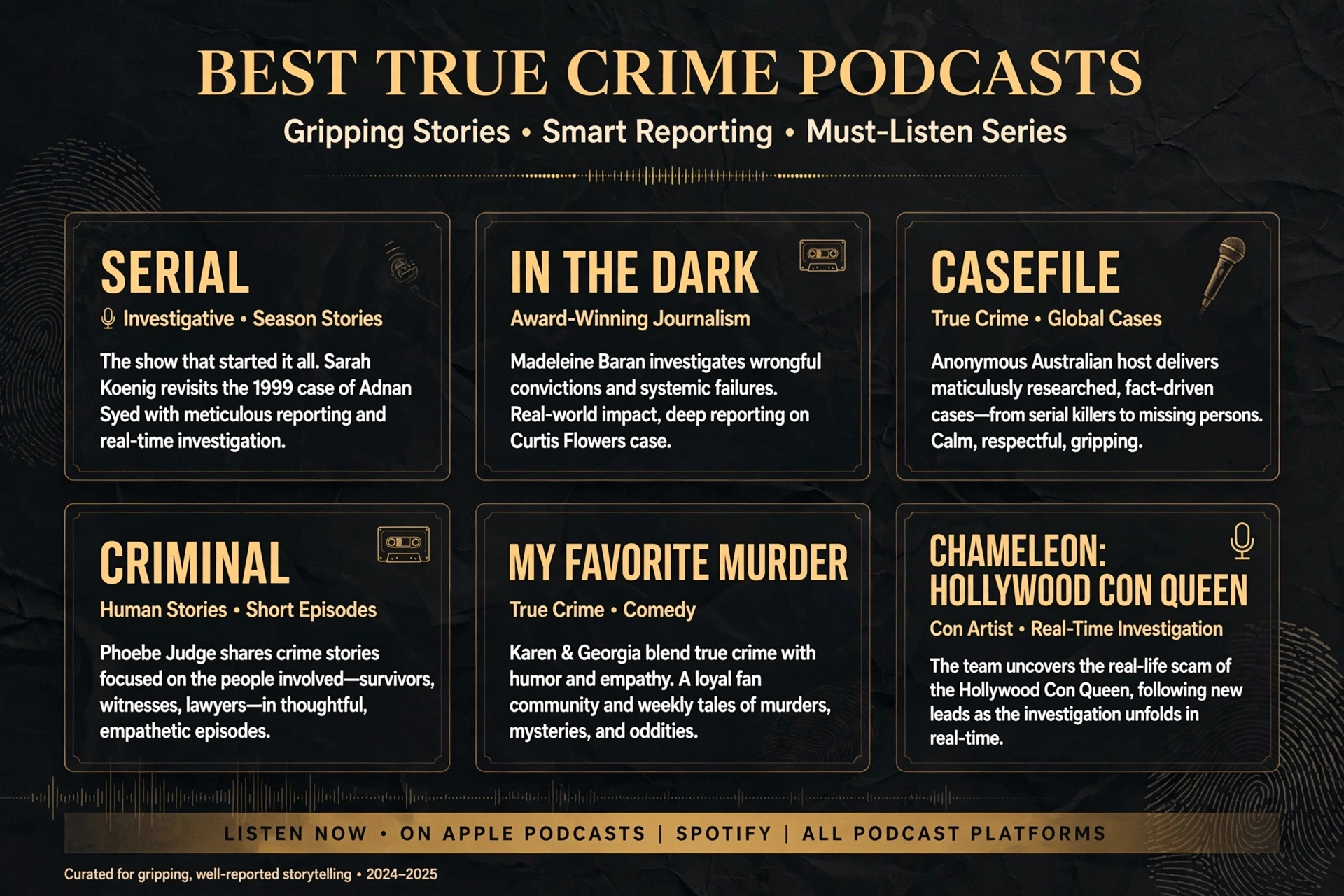
True crime podcasts have become one of the most popular forms of audio entertainment, and it is easy to understand why. A well-produced series can combine investigative journalism, courtroom drama, psychology, history, and storytelling into an experience that keeps listeners engaged from one episode to the next. The best true crime podcasts do more than simply describe shocking events—they provide context, examine evidence, and explore the human stories behind real cases.
There is now a true crime podcast for almost every type of listener. Some people enjoy long-form investigations that focus on a single case for an entire season, while others prefer standalone episodes covering a different crime each week. You can also find shows centered on unsolved mysteries, wrongful convictions, fraud, disappearances, serial crimes, and historical cases.
With so many options available, choosing what to listen to can feel overwhelming. This guide explores the qualities that make a true crime podcast worth your time and highlights several well-known shows that have helped define the genre.
What Makes a True Crime Podcast Worth Listening To?
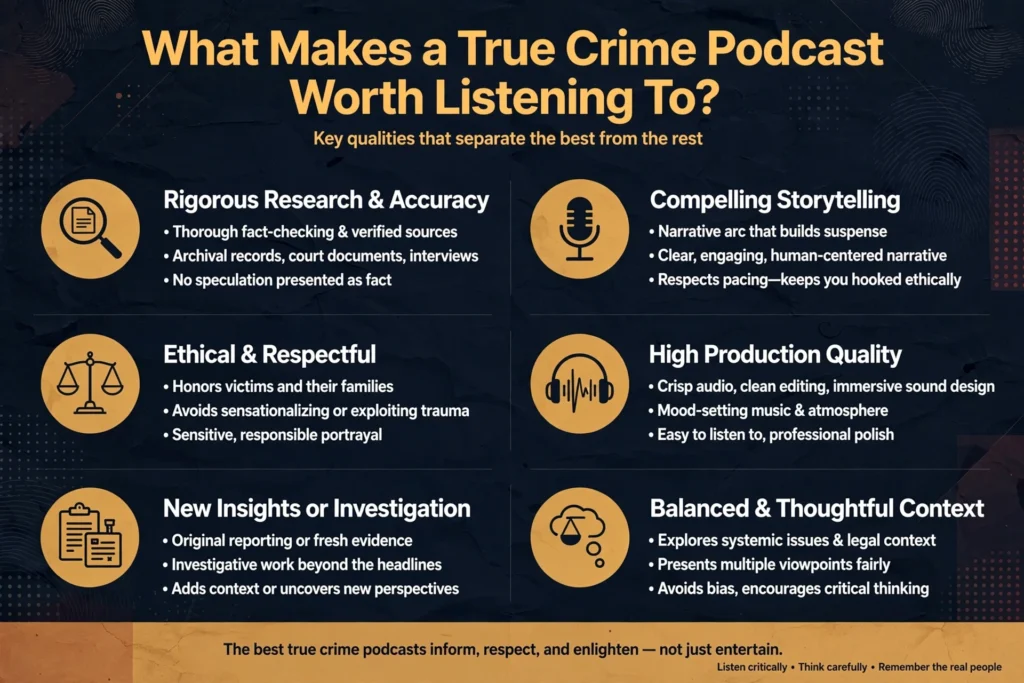
The strongest true crime podcasts begin with careful research. A dramatic story may attract attention, but good reporting is what gives a podcast lasting value. Reliable shows often use court documents, interviews, news archives, expert commentary, and other available evidence to create a clearer picture of what happened.
Storytelling is equally important. Even a well-researched case can become difficult to follow if the podcast jumps between events without structure. The best hosts know how to organize complicated information, introduce important people, and explain timelines without confusing the listener.
Ethics should also matter. True crime involves real victims, families, and communities. Responsible podcasts avoid treating serious events as simple entertainment and try to balance audience interest with respect for the people affected by the case.
Serial: The Podcast That Changed the Genre

When discussing the best true crime podcasts, Serial is almost impossible to ignore. Its first season helped demonstrate how a podcast could take one complicated criminal case and investigate it over multiple episodes.
The show became popular because of its detailed approach. Instead of simply presenting a case from beginning to end, the series examined contradictions, unanswered questions, witness accounts, and the limitations of available evidence. This format encouraged listeners to think critically rather than passively accept a simple conclusion.
The success of Serial also influenced the wider podcast industry. It showed producers that audiences were willing to spend hours following a single story when the reporting and narrative were strong enough.
Criminal: Short Stories With a Different Perspective
Criminal takes a different approach from long-form investigative series. Each episode generally focuses on a separate story connected to crime, justice, or unusual human behavior.
One of the show’s strengths is its variety. An episode may focus on a well-known criminal case, an unusual historical event, a person affected by the justice system, or a story that challenges the listener’s assumptions about what crime actually means.
The podcast’s calm storytelling style also sets it apart. Rather than relying entirely on dramatic music or shocking details, the show often lets interviews and carefully chosen information carry the narrative.
Casefile: Detailed and Atmospheric Storytelling
Casefile is popular among listeners who prefer highly structured, detail-focused storytelling. The show covers cases from different parts of the world and often presents the information in a chronological format.
The anonymous narration style creates a serious and focused atmosphere. Listeners are encouraged to follow the evidence, timeline, and investigation without excessive conversation between hosts.
Another strength of Casefile is the range of cases covered. The show explores murders, disappearances, fraud, serial crimes, and other criminal investigations, making it suitable for listeners who want variety while maintaining a consistent storytelling format.
Crime Junkie: Easy to Follow and Highly Accessible

Crime Junkie has developed a large audience because of its conversational style and straightforward presentation. The show typically covers a different case in each episode, making it easy for new listeners to start almost anywhere.
The accessible format is one of its biggest advantages. Cases are generally explained in a clear structure, allowing listeners to follow the important facts without feeling overwhelmed by unnecessary detail.
For people who are new to true crime podcasts, Crime Junkie can be a convenient starting point. Its episodes are designed to be easy to consume, while the variety of cases means there is usually something that appeals to different interests.
My Favorite Murder: True Crime With Conversation and Humor
My Favorite Murder became well known for combining true crime stories with casual conversation between its hosts. The show has a very different tone from traditional investigative journalism podcasts.
Its conversational style makes listeners feel as though they are hearing friends discuss cases rather than listening to a formal documentary. That approach has helped build a strong community around the podcast.
At the same time, humor in true crime can be controversial. The best way to approach this style is to remember that different listeners have different preferences. Some enjoy a lighter conversational format, while others prefer serious investigative reporting.
In the Dark: Investigative Journalism at Its Best
For listeners who want deep reporting, In the Dark is an excellent example of how podcasting can support serious investigative journalism. The series takes a detailed look at specific cases and examines larger issues within the justice system.
Rather than focusing only on the crime itself, the podcast explores how investigations are conducted, how institutions make decisions, and how mistakes can affect real lives.
This broader perspective is what makes investigative true crime especially valuable. A strong series can raise questions about evidence, policing, prosecution, media coverage, and the legal process while still telling a compelling story.
Someone Knows Something: Exploring Unsolved Cases
Unsolved mysteries have always attracted public interest, and Someone Knows Something focuses on cases where important questions remain unanswered.
The long-form format allows the investigation to develop gradually. Listeners hear about the original events, the people involved, and efforts to uncover new information.
What makes this type of podcast especially interesting is the uncertainty. Unlike a case with a clear legal conclusion, an unsolved investigation may continue to evolve. New interviews, evidence, or public attention can sometimes change the direction of the story.
Your Own Backyard: A Powerful Long-Form Investigation
Your Own Backyard demonstrates the impact that independent investigative storytelling can have. The podcast gained significant attention for its detailed examination of the disappearance and death of Kristin Smart.
The series carefully explored the history of the case and brought together interviews, reporting, and publicly available information. Its approach showed how a dedicated podcast can encourage renewed public interest in a case that has remained unresolved for years.
This type of long-form series is particularly appealing to listeners who enjoy following one story from the beginning. Instead of trying to understand a new case every episode, the audience becomes familiar with the people, locations, and evidence over time.
Dr. Death: When Crime and Medicine Collide
Dr. Death explores cases involving serious allegations within the medical world. The combination of professional authority, trust, and alleged wrongdoing creates a different type of true crime story.
Medical crime can be especially disturbing because patients often depend completely on professionals to protect their health. When that trust is violated, the consequences can be devastating.
The podcast also demonstrates that true crime is not limited to traditional murder investigations. Fraud, professional misconduct, corporate wrongdoing, and abuse of power can all produce compelling stories with serious real-world consequences.
Bear Brook: A Story of Identification and Investigation
Bear Brook explores a complex criminal case involving unidentified victims and advances in forensic investigation. The story demonstrates how modern technology can change the way old cases are approached.
One of the most interesting aspects of this type of podcast is the connection between science and criminal justice. Advances in DNA analysis and investigative techniques have created new opportunities to identify victims and examine evidence.
For listeners who enjoy the investigative side of true crime, stories involving forensic science can be especially compelling. They show how cases can continue to develop years or even decades after the original crimes occurred.
How to Choose the Best True Crime Podcast for You
The best podcast depends heavily on what type of stories you enjoy. If you like deep investigations, choose a long-form series that spends an entire season on one case.
If you prefer variety, episodic shows may be a better choice. These podcasts allow you to hear a new story every week and usually make it easy to choose episodes based on your interests.
You should also consider tone. Some podcasts are serious and journalistic, while others are conversational and informal. There is no universally correct style, so finding the right match is often more important than simply choosing the most popular show.
Single-Case Series vs. Weekly True Crime Shows
Single-case podcasts offer depth. A season can spend hours examining a timeline, reviewing evidence, interviewing witnesses, and discussing the legal process.
Weekly shows offer flexibility. You can listen to one episode during a commute or while exercising without needing to remember everything from previous episodes.
Both formats have advantages. If you enjoy becoming deeply invested in one investigation, a serialized podcast may be ideal. If you prefer a fresh story each time you listen, an episodic format might be more suitable.
Why Ethical True Crime Matters
True crime stories involve real people, and responsible storytelling should recognize that fact. Victims should not become background characters in a story designed only to entertain an audience.
Good podcasts provide context and avoid unnecessary sensationalism. They acknowledge uncertainty when evidence is incomplete and avoid presenting speculation as established fact.
Listeners can also play a role by thinking critically about the information they consume. A podcast can be engaging without being a complete source of legal or historical truth, so it is always useful to distinguish between verified facts, opinions, and unresolved questions.
Tips for Getting the Most Out of True Crime Podcasts
Start with a show that matches your preferred listening style. If you enjoy documentaries, investigative series may be a natural fit. If you prefer conversations, choose a podcast with hosts who discuss cases in a more relaxed format.
Do not feel pressured to listen to every episode in chronological order unless the series requires it. Episodic shows often allow you to select stories that interest you most.
It can also be helpful to take breaks. Some true crime topics can be emotionally heavy, particularly when they involve violence, missing persons, or serious injustice. Mixing true crime with lighter podcasts can create a more balanced listening experience.
Read More: spider man wallpaper
Final Thoughts on the Best True Crime Podcasts
The best true crime podcasts combine compelling storytelling with careful research and respect for the real people involved. Whether you prefer a season-long investigation or a new case every week, the genre offers an enormous variety of listening experiences.
Shows such as Serial, Criminal, Casefile, Crime Junkie, In the Dark, Someone Knows Something, Your Own Backyard, Dr. Death, and Bear Brook demonstrate just how diverse true crime podcasting can be.
The right choice ultimately depends on your interests. Try a few different formats, pay attention to the storytelling style you enjoy most, and choose shows that handle serious subjects responsibly. With so many excellent series available, finding your next compelling true crime story is easier than ever.