
Buying a car with a salvage title can seem like a great way to save money. However, it also comes with extra work. You need to understand the title, repair the vehicle, collect documents, and follow your local rules.
Many people search for how to get a salvage title cleared because they want to put a damaged vehicle back on the road. The process can seem confusing at first. Luckily, it becomes easier when you handle each step carefully.
A salvage title does not always mean a car is useless. Some vehicles can return to the road after proper repairs. However, you usually cannot just erase the salvage brand from the title.
Instead, your local motor vehicle agency may allow you to apply for a rebuilt, reconstructed, or similar title. The exact name depends on your location.
This guide explains the process in simple terms. It also covers repairs, inspections, paperwork, costs, insurance, resale value, and common mistakes.
What Is a Salvage Title?
A salvage title is a special title status for a vehicle that suffered serious damage. The damage may happen because of a crash, flood, fire, theft, or another major event.
Insurance companies often declare vehicles a total loss after serious damage. However, the exact rules for a total loss differ by location.
When this happens, the vehicle may receive a salvage title. This title warns future buyers that the car has a major damage history.
A salvage title does not always tell you exactly how badly the vehicle was damaged. Therefore, you should investigate the car’s history before buying or repairing it.
Why Do Cars Get Salvage Titles?
There are several reasons a vehicle can receive a salvage title.
A major accident is one of the most common reasons. The damage may affect the front, rear, sides, frame, suspension, or other important areas.
Flood damage can also lead to a salvage title. Water can damage wiring, computers, seats, carpets, and other components.
Fire damage creates another risk. In addition, some stolen vehicles can receive a branded title after an insurance claim and later recovery.
Knowing the reason behind the title is very important. It can help you decide whether the vehicle makes sense to repair.
Can You Really Clear a Salvage Title?
This is where many people get confused.
In many locations, you cannot simply remove the word “salvage” from the vehicle history. Instead, you may be able to change the vehicle’s title status after completing the required process.
For example, your local authority may issue a rebuilt or reconstructed title after the vehicle passes an inspection.
Therefore, when someone searches for how to get a salvage title cleared, they may actually mean how to move a vehicle from salvage status to a legal rebuilt status.
The exact process depends on your state, province, or country. Always check the rules that apply to the vehicle.
Start by Checking Local Laws
Your first step should be checking the official rules in your area.
Do this before spending money on repairs. Different locations can have different requirements.
One state may require a special inspection. Another may ask for repair photographs and detailed receipts.
Some areas may also have special rules about replacement parts. Therefore, never assume that a process from another state will work for you.
This is one of the most important steps in learning how to get a salvage title cleared.
Find Out Why the Vehicle Was Salvaged
Before repairing the vehicle, find out what caused the salvage title.
Ask the seller for any information about the accident or damage. If possible, check available vehicle history records.
You should also compare the information with the current condition of the car.
For example, a car damaged in a small collision may have a different repair path from a flood-damaged vehicle.
Understanding the original damage can help you create a realistic repair budget.
Inspect the Vehicle Before Repairs
Do not start replacing parts immediately.
First, have the vehicle inspected by someone who understands cars. A qualified mechanic can find problems that may not be obvious.
The inspection should cover major systems. These can include the engine, transmission, brakes, steering, suspension, electrical system, and safety equipment.
If the vehicle had collision damage, the structure deserves special attention.
A car can look fine on the outside while still having serious problems underneath.
Create a Repair Budget
After the inspection, make a repair budget.
Start with the purchase price. Then add parts, labor, towing, paint, inspection fees, title fees, registration, and insurance.
Also leave some money for unexpected problems.
Salvage vehicles can contain hidden damage. A part that looks fine may still need replacement.
Therefore, do not build your budget around the cheapest possible outcome.
A realistic budget can help you decide whether the project makes financial sense.
Repair Safety Problems First
Safety should come before appearance.
Start with brakes, steering, suspension, airbags, seat belts, tires, lights, and structural repairs.
A fresh paint job will not make an unsafe car safe.
Therefore, focus on the systems that protect people first.
If you do not have experience with safety-related repairs, consider hiring a qualified professional.
Good repairs can protect you, your passengers, and future buyers.
Repair the Vehicle Properly
Once you have a plan, begin the repairs.
Use suitable replacement parts and follow proper repair procedures. Do not cut corners simply because the vehicle already has a salvage title.
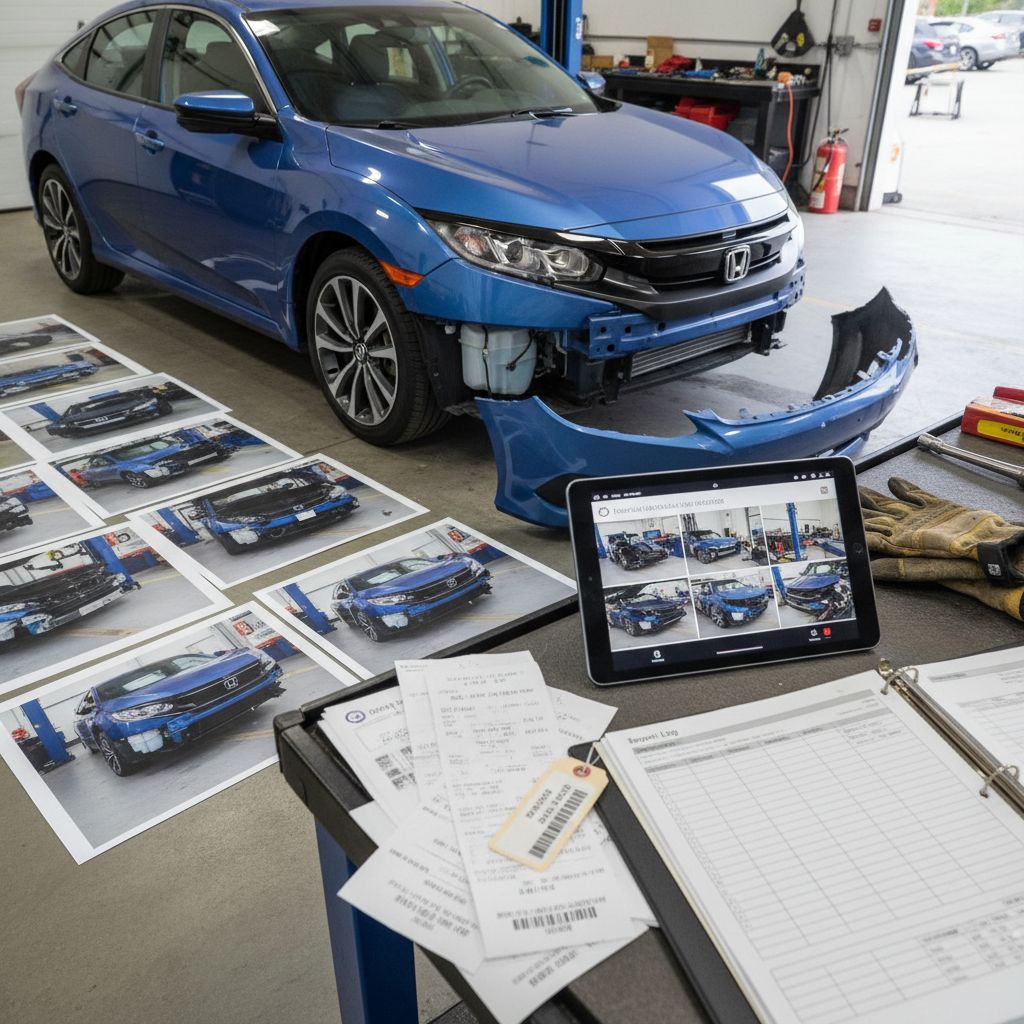
If you use a repair shop, keep every invoice.
If you repair the vehicle yourself, keep receipts for the parts you purchase.
Good records can help show what work you completed and where major parts came from.
Keep All Receipts
Receipts can become very important during the title process.
Keep receipts for replacement parts, labor, towing, and other major expenses.
Organize them by date. You can also create separate sections for body work, mechanical work, and safety repairs.
Do not throw away receipts after installing the parts.
Depending on your local rules, officials may want to see documentation during the inspection.
Good paperwork can make the process much smoother.
Take Photos During the Repair
Photos can provide a useful record of your work.
Take pictures before repairs begin. Then take more pictures during major stages.
For example, photograph damaged areas before removing parts. Take additional pictures after major repairs.
Try to make the pictures clear. Show enough of the vehicle so someone can understand what they are seeing.
Some jurisdictions may require photographs. Even when they do not, pictures can still help document your work.
Check Replacement Parts Carefully
Replacement parts deserve attention.
Used parts can save money. However, you should know where important parts came from.
Keep purchase receipts and other available information.
Some locations have specific requirements for documenting parts used on salvage vehicles.
Therefore, check the rules before purchasing expensive components.
Do not buy parts with a questionable history. Cheap parts are not worth creating legal or safety problems.
Prepare for the Salvage Inspection
After completing the repairs, prepare for the required inspection.
First, read the inspection instructions again.
Then collect your title, receipts, photographs, identification, application forms, and other required documents.
Make sure your paperwork is organized.
Also check the vehicle identification number, commonly called the VIN.
The VIN should match the vehicle and the paperwork.
Small mistakes can delay the process, so review everything before your appointment.
What Does the Inspection Check?
The inspection depends on your location.
An inspector may verify the vehicle’s VIN. They may also review repair documents and receipts.
The inspector may check certain vehicle components as well.
In some areas, the inspection helps prevent stolen parts from entering the legal vehicle market.
The vehicle may also need to meet specific safety or road requirements.
Always follow the instructions provided by your local authority.
What Happens If You Fail the Inspection?
Failing an inspection does not always mean you have lost the project.
First, find out why the vehicle failed.
Read the inspection report carefully. It should explain the problem or problems that need attention.
Next, repair those issues.
Keep any new receipts or documents.
After making the required corrections, follow the local process for another inspection.
Do not try to hide the problem. Fixing it correctly is the safer choice.
What Documents Do You Need?
The exact paperwork varies by location.
However, you may need several common documents.
These can include:
- Current salvage title
- Title application
- Repair receipts
- Parts receipts
- Repair photographs
- Proof of ownership
- Identification
- Inspection paperwork
- Insurance information
- Registration documents
Your local authority may require additional forms.
Therefore, make a checklist before your appointment.
This simple step can prevent unnecessary trips to the title office.
How Much Does It Cost to Clear a Salvage Title?
There is no single cost.
The title and inspection fees may be relatively small. However, the repair bill can become much larger.
Your total cost may include parts, labor, towing, paint, mechanical repairs, inspection fees, title fees, registration, and insurance.
The type of damage also matters.
A lightly damaged vehicle may cost much less to repair than one with major structural or flood damage.
Always calculate the total project cost before starting.
How Long Does the Process Take?
The timeline can vary widely.
Repairs may take a few days, several weeks, or longer.
Parts availability can also affect the schedule. If a rare part is difficult to find, repairs may take longer.
After repairs, you may need to wait for an inspection appointment.
The title agency may then need additional time to process your application.
So, avoid expecting the entire process to finish in a single day.
Can You Repair a Salvage Vehicle Yourself?
In some locations, you can repair your own vehicle.
However, local rules may have specific requirements.
Some jurisdictions may allow owner repairs but still require an inspection and detailed documentation.
You should be careful with structural and safety-related repairs.
If you lack the necessary skills, use a qualified repair professional.
Saving labor costs is not worth creating an unsafe vehicle.
Why Structural Repairs Matter
The vehicle’s structure plays an important safety role.
After a serious crash, the frame or other structural areas may need professional attention.
A car can look straight after body work while still having structural problems.
Therefore, do not judge a repaired vehicle only by its appearance.
If the vehicle suffered heavy collision damage, consider having the structure checked by a qualified professional.
Be Careful With Flood-Damaged Cars
Flood-damaged vehicles need special attention.
Water can reach electrical connectors, control modules, wiring, carpets, seats, and other components.
Some problems may not appear immediately.
For this reason, flood-damaged vehicles can be risky projects.
Before spending money, learn as much as possible about the vehicle’s history.
A professional inspection can also help you understand the potential problems.
Does a Salvage Title Affect Insurance?
It can.
Insurance companies have their own rules for salvage and rebuilt vehicles.
Some companies may offer limited coverage. Others may require an inspection before providing certain coverage.
Therefore, contact insurance companies before completing a large repair project.
Ask about the exact vehicle and its title status.
Do not assume that a rebuilt vehicle will receive the same insurance options as a clean-title vehicle.
Can You Register a Rebuilt Vehicle?
In many locations, a rebuilt vehicle can qualify for registration after meeting the required conditions.
However, the process depends on local law.
You may need to complete a salvage inspection first.
You may then need to submit title paperwork and pay the required fees.
Insurance may also be necessary before registration.
Always check the requirements in your location instead of relying on general advice.
Does a Rebuilt Title Become a Clean Title?
Usually, a rebuilt title is not the same as a clean title.
The vehicle’s history can continue to show that it previously carried a salvage title.
This is an important point when researching how to get a salvage title cleared.
Changing the title status does not necessarily erase the vehicle’s past.
Therefore, buyers should understand the difference between salvage, rebuilt, reconstructed, and clean titles.
Can You Sell a Rebuilt Vehicle?
A properly titled rebuilt vehicle can often be sold.
However, you should follow all applicable disclosure laws.
Tell potential buyers about the vehicle’s title history.
Also explain what you know about the original damage.
If you have repair photos and receipts, consider sharing them with serious buyers.
Clear information can help build trust.
Never describe a rebuilt vehicle as a clean-title vehicle if its records show otherwise.
How Does a Salvage Title Affect Resale Value?
Title history can affect a vehicle’s value.
Many buyers prefer clean-title cars. They may worry about hidden damage or future mechanical problems.
As a result, a rebuilt vehicle may sell for less than a similar clean-title vehicle.
Still, good documentation can help.
A buyer may feel more comfortable when you can show repair records and explain the work clearly.
However, you should still expect the title history to affect the price.
How to Get a Salvage Title Cleared Without Problems
The best approach is simple.
First, learn your local requirements.
Second, inspect the vehicle carefully.
Third, repair it properly.
Fourth, document the work.
Fifth, complete the required inspection.
Finally, submit accurate title paperwork.
Do not look for shortcuts.
If someone promises to remove a salvage brand without following the official process, be careful.
A legitimate process should involve the appropriate authority.
Common Mistakes to Avoid
Many salvage projects fail because the owner rushes.
Here are some mistakes you should avoid:
- Buying without checking the title
- Ignoring the damage history
- Skipping a professional inspection
- Starting repairs without a budget
- Losing receipts
- Ignoring safety equipment
- Forgetting photographs
- Submitting incomplete forms
- Assuming every state has the same rules
- Using false information
Avoiding these mistakes can save time and money.
Is a Salvage Car Worth Repairing?
It depends on the vehicle.
A salvage car can make financial sense when the purchase price is low and the damage is manageable.
It can also work well when you have access to affordable parts and trusted repair help.
However, serious damage can change the numbers quickly.
Calculate the total cost before deciding.
Compare your estimated final cost with the price of a similar clean-title vehicle.
Then consider insurance and resale value too.
When Should You Avoid a Salvage Vehicle?
Some salvage cars are simply too risky.
Be careful with vehicles that have severe structural damage.
Also use caution with extensive flood or fire damage.
A complicated repair history can create additional uncertainty.
Missing paperwork is another warning sign.
You should also be careful when a seller refuses to explain the title history.
If something feels wrong, slow down and investigate before paying.
How to Get a Salvage Title Cleared Faster
You cannot control every part of the process.
However, you can prevent many avoidable delays.
Start by reading the requirements before beginning repairs.
Then collect documents as you work instead of waiting until the end.
Keep your receipts in one folder.
Take photographs during major repairs.
Before the inspection, check the vehicle and paperwork one more time.
Complete applications carefully.
These small steps can make the process easier.
A Simple Salvage Title Checklist
Use this checklist to stay organized:
- Check local title laws.
- Read the current title.
- Verify the VIN.
- Find out why the car was salvaged.
- Get a professional inspection.
- Create a repair budget.
- Repair safety problems.
- Complete mechanical repairs.
- Keep all receipts.
- Take repair photographs.
- Prepare inspection documents.
- Schedule the required inspection.
- Correct any failed items.
- Submit the title application.
- Pay required fees.
- Confirm registration requirements.
- Check insurance options.
Following a checklist can help you avoid missed steps.
How to Get a Salvage Title Cleared After a Major Accident
A crash-damaged vehicle needs careful inspection.
Start by checking the structure. Then inspect suspension and steering components.
Next, check airbags and seat belts.
After that, inspect the engine, transmission, cooling system, lights, and electrical components.
Body work should come after important safety and mechanical repairs.
Keep detailed records throughout the process.
Finally, complete the inspection required by your local authority.
How to Get a Salvage Title Cleared After Flood Damage
Flood damage requires a different approach.
Start by finding out how deep the water reached.
Then inspect wiring and electrical components.
Check computers and other electronic systems carefully.
Also inspect the interior for moisture and signs of mold or water exposure.
Because hidden electrical problems can appear later, professional inspection can be valuable.
Do not assume that a clean interior means the vehicle has no water damage.
How to Get a Salvage Title Cleared After Theft Recovery
A recovered stolen vehicle can have its own title issues.
Start by checking the title history.
Confirm the VIN and ownership documents.
Then find out why the vehicle received its current title status.
Some recovered vehicles may have missing parts or damage.
Repair the vehicle according to local requirements.
Keep documentation for replacement parts.
Finally, follow the appropriate inspection and title procedure.
How to Protect Yourself From Title Scams
Be careful with anyone who promises an instant title solution.
A legitimate title process should follow the rules of the appropriate authority.
Do not use fake documents.
Do not change vehicle identification information.
Do not hide the vehicle’s history.
Also avoid deals that require you to provide false information.
If someone says they can make a salvage title disappear without repairs or inspection, investigate the claim before doing anything.
What Should You Tell a Buyer?
Always provide accurate information.
Tell the buyer that the vehicle had a salvage title if that history applies.
Explain what damage you know about.
Then describe the repairs you completed.
You can also provide repair receipts and photographs.
A buyer may decide that the vehicle is not right for them.
That is okay.
Honest selling protects you and helps the buyer make an informed decision.
Tips for Buying a Salvage Vehicle
If you are still deciding whether to buy one, slow down.
Check the title before paying.
Research the vehicle history.
Have a mechanic inspect it.
Estimate repair costs.
Ask about parts availability.
Check insurance options.
Then compare the total cost with other vehicles.
A low purchase price alone does not make a salvage vehicle a good deal.
The complete project cost matters more.
Final Steps for Getting the New Title
After the vehicle passes the required inspection, you can usually move to the title application stage.
Complete the required forms carefully.
Submit the documents requested by your local authority.
Pay the applicable fees.
Then wait for the title agency to process your application.
The new title may carry a rebuilt, reconstructed, or another brand.
Check the document when you receive it.
Make sure the VIN and other important information are correct.
5 Small FAQs About Salvage Titles
Can a salvage title become a clean title?
Usually, the salvage history does not simply disappear. Depending on local law, the vehicle may qualify for a rebuilt or reconstructed title after completing the required process.
How much does it cost to clear a salvage title?
There is no fixed amount. Costs can include repairs, parts, labor, inspections, title fees, registration, and insurance.
Do I need a salvage inspection?
Many jurisdictions require an inspection before a salvage vehicle can receive another title status. However, the exact requirements vary by location.
Can I sell a rebuilt vehicle?
In many places, yes. However, you must follow applicable disclosure rules and accurately explain the vehicle’s title history.
Is a rebuilt title bad?
Not necessarily. A properly repaired vehicle can be useful. However, its previous salvage history can affect insurance, resale value, and buyer interest.
Conclusion
Learning how to get a salvage title cleared starts with understanding your local rules.
You usually cannot simply erase a salvage title. Instead, you may need to repair the vehicle and complete an inspection.
Start by finding out why the vehicle received its salvage title. Then have it inspected and create a realistic repair budget.
Focus on safety first. Repair the structure, brakes, steering, suspension, airbags, and other important systems properly.
Also, keep every receipt. Take photographs during the repair process. These records can help during the title inspection.
Once the repairs are complete, prepare your paperwork and schedule the required inspection.
If the vehicle passes, submit the title application and pay the required fees.
Remember that the final title may still show a rebuilt or reconstructed status. The old salvage history can affect resale value and insurance.
Therefore, take your time and follow the legal process. Avoid shortcuts and false paperwork.
When you handle the repairs carefully and keep good records, the process becomes much easier to understand. Most importantly, focus on creating a safe vehicle rather than simply changing its title status.